News
In the Khorezm region, they want to lift 81,000 people out of poverty and employ 39,000 unemployed people by the end of the year
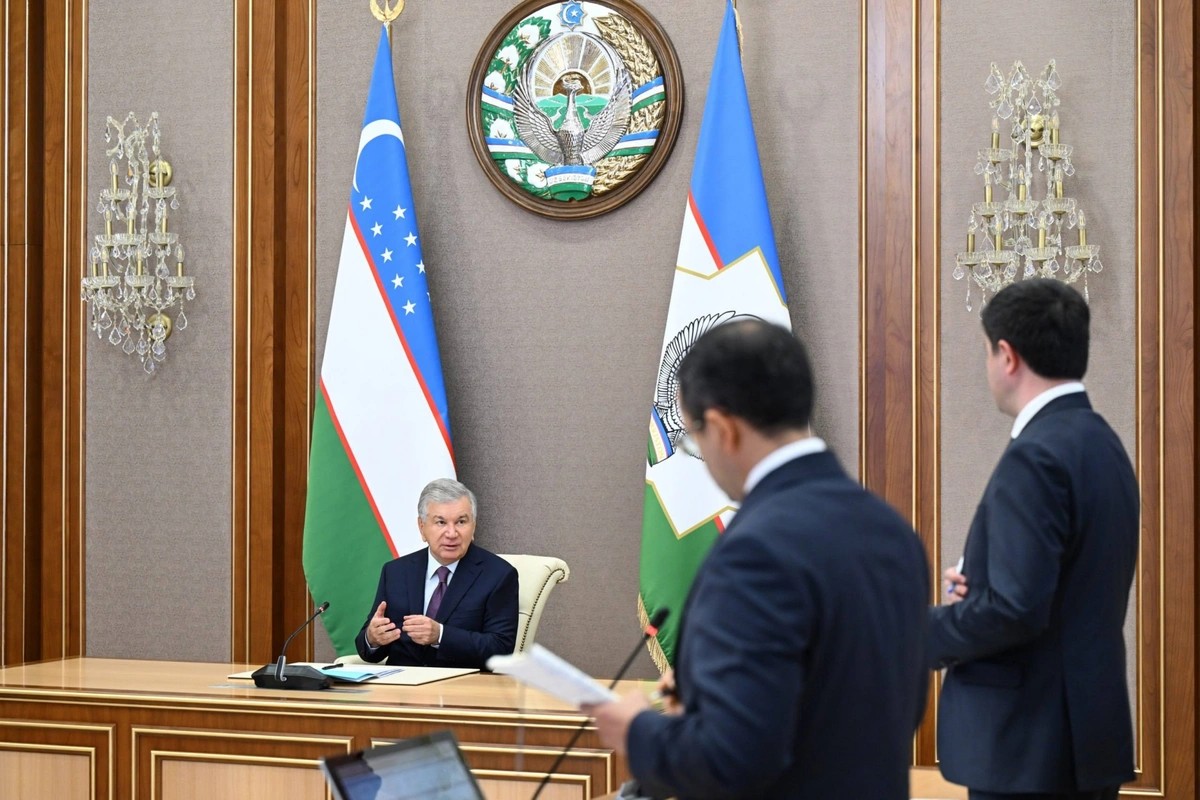
On August 20, Shavkat Mirziyoyev reviewed a presentation of the next measures to ensure employment, increase the population’s income, and reduce poverty in the country, using the Khorezm region as an example, the presidential press service reported.
Since the beginning of the year, the incomes of 162,000 people in the region have increased, 29,000 citizens have been employed on a permanent basis, and the informal employment of 37,000 people has been legalized.
As part of support for low-income families, 126,600 people from 28,900 families received more than 40,000 services. In particular, 12,400 people were employed, 23,600 were involved in entrepreneurship, 3,300 received financial assistance, and another 1,100 completed vocational training.
As a result, since the beginning of the year, the official incomes and financial situation of 127,000 people from 29,000 families included in the “Social Register” have improved. These families were lifted out of poverty. The poverty rate in the region fell from 6.7% at the beginning of the year to 3.9%.
At the same time, 39,000 unemployed people remain in the Khorezm region, and another 102,000 people are in labor migration. One of the main problems identified was the gap between available vacancies and the professional training of job seekers. There are currently more than 50,000 vacancies in the region, but some of them remain unfilled due to a shortage of qualified personnel.
Another issue highlighted was students’ lack of practical skills. According to surveys conducted, 63% of university students said that they do not receive sufficient practical training during their studies.
In this regard, the task has been set to strengthen practical training in secondary specialized and vocational education institutions, as well as to use the opportunities of universities. In particular, universities are planned to organize afternoon classes to develop students’ professional and practical skills.
6.4 trillion soums were allocated to reduce poverty and ensure employment in the region. In particular, using 2.1 trillion soums in resources from commercial banks, 1.5 trillion soums in loans were issued in mahallas, making it possible to provide financial resources to all mahallas in the region.
The president instructed that banks’ contribution to reducing unemployment and poverty be assessed based on concrete results in mahallas. Banks must become “factories of projects” that turn local opportunities and initiatives into concrete business projects.
By the end of the year, it is planned to lift 81,000 people from 18,000 low-income families out of poverty and provide permanent jobs for 39,000 unemployed people.
“These are not just numbers. We should apply an individual approach to each person, know their capabilities well, and based on that, find them a decent job,” the president said.
To achieve these goals, investment projects in industry, services, tourism, transport, agriculture, and construction will be utilized. In industrial microcenters, it is planned to create 250 new enterprises, as well as expand projects involving mahalla bankers.
In the fields of poultry farming, livestock breeding, fish farming, furniture production, greenhouse farming, and crop production, 36 cooperatives will be created. It is planned to involve 15,800 low-income families from 201 mahallas in them.
In addition, 70 “locomotive” projects will be implemented in 12 anchor and 38 adjacent mahallas, which should create 1,100 jobs. 650 billion soums will be allocated for entrepreneurial projects, making it possible to implement 2,500 microprojects.
The development plan for the Shikhbogi mahalla in Yangiarik district was separately considered as an anchor one. Together with it, the Karmish, Sherobod, and Kattabog mahallas will be included in the project. These areas are home to 18,200 people and 319 business entities operate there.
It is planned to create an industrial zone, an industrial microcenter, a modern market, and service sector facilities here, establish an intensive orchard, and launch livestock and poultry complexes. In addition, internal roads, pedestrian, and engineering infrastructure will be improved.
With the participation of foreign consulting organizations, a master plan for the development of this territory will be developed and the qualifications of local designers will be improved. As a result, it is planned to create 1,500 stable jobs, increase the population’s income by 20–30%, and make the territory free of poverty and unemployment.
Following the presentation, the head of state instructed that the existing mechanisms and methodology for working with needy segments of the population be completely revised. Proposals for taking the poverty reduction policy to a new stage are planned to be prepared and discussed at a separate videoconference meeting.
Source
Media Support